
Which Real Estate Strategy Works Better in Nigeria?
When Nigerians think about real estate investment, the first thing that comes to mind is usually rental property. Build a house, rent it out, collect rent every year. While this approach can work, it is not always the best or easiest option for every investor.
In recent years, land banking has emerged as an alternative investment strategy. This has raised an important question for investors. Is land banking better than buying rental property in Nigeria?
The answer depends on your goals, capital, and risk tolerance.
Understanding Land Banking
Land banking involves purchasing land in a growing area and holding it while development and infrastructure gradually increase its value.
There are no tenants to manage, no buildings to maintain, and no recurring operational expenses. Returns come mainly from appreciation rather than monthly income.
This approach appeals to investors who prefer minimal involvement after purchase
Understanding Rental Property Investment
Rental property investment focuses on earning income through tenants. This usually requires buying or building a house, handling occupants, maintaining the property, and dealing with repairs and vacancies.
While rental income can be steady, it often involves higher upfront costs and continuous management.
Feature Story; A Common Investment Decision
In 2022, Mr. Musa, a civil servant based in Abuja, began looking for a way to invest his savings. He considered building a small rental property because the idea of yearly rent felt secure.
After reviewing the costs, he realized that land purchase, construction, and finishing would consume most of his capital. He was also concerned about future repairs and the time required to manage tenants alongside his full time job.
He eventually decided to buy land in a developing area instead, with the intention of holding it for a few years. His goal was not quick profit but preserving value and allowing gradual appreciation.
Over time, development slowly reached the area. Roads improved, more houses appeared, and demand increased. When he later compared the value of the land to the rental income he would likely have earned after construction costs and maintenance, the land investment compared favorably.
For him, the decision came down to time, stress, and financial flexibility rather than which option sounded better.
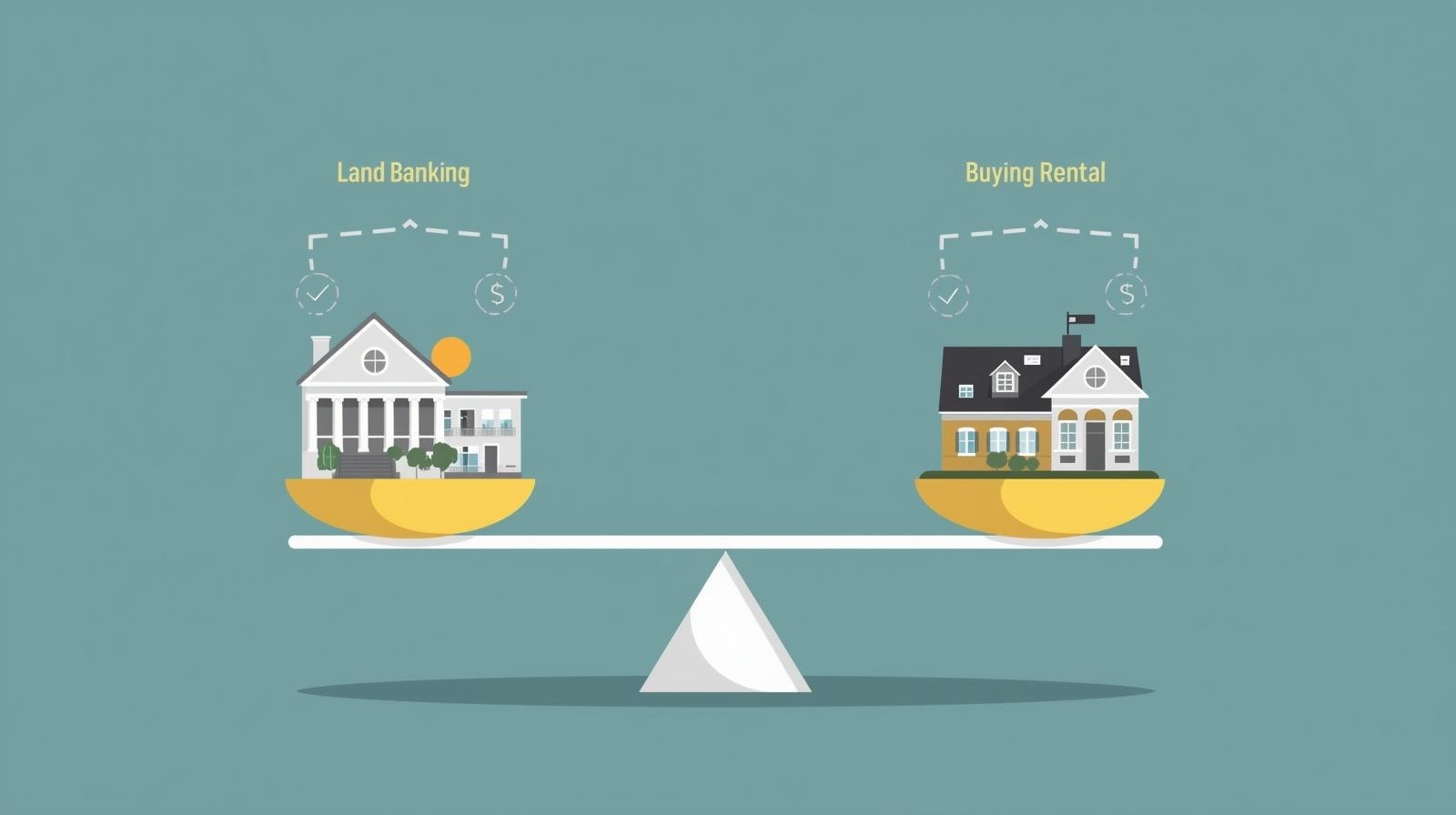
Cash Flow vs Capital Growth
Rental property offers periodic income through rent. However, vacancies, tenant issues, and maintenance costs can reduce actual earnings.
Land banking does not provide regular income, but it can result in stronger capital growth over time when the location develops as expected.
Risk and Stress Level
Rental properties involve ongoing responsibilities. Tenants may default, buildings require maintenance, and unexpected expenses can arise.
Land banking carries fewer daily obligations. The main risks relate to land title, location, and development pace.
Liquidity and Exit Strategy
Selling a rental property can take time and depends on market conditions and property condition.
Land in growing areas may be easier to sell once demand increases, provided documentation is clear.
Which Option Is Better in Nigeria?
There is no universal answer.
Land banking may suit investors who
- Prefer long term growth.
- Want minimal involvement.
- Have limited time.
- Are working with moderate capital.
Rental property may suit investors who
- want regular income
- are comfortable with management
- have sufficient funds for construction and upkeep
Final Thoughts
Both land banking and rental property play important roles in Nigeria’s real estate market. The right choice depends on individual circumstances.
For many working professionals, the decision often comes down to how much time, capital, and involvement they are willing to commit.
Understanding these factors helps investors choose a strategy that aligns with their financial reality rather than popular opinion.
Ready to Start Investing?
Whether you are exploring land banking or planning a rental property project, the first step is always choosing the right location and understanding the investment structure.
Focus on verified land, proper documentation, and areas with visible growth to make informed decisions that support your long-term goals.
