
Land remains one of the most powerful wealth building assets in Nigeria. In Abuja, this reality is reinforced by a structured legal framework and deliberate urban planning system that guides how land is allocated, transferred, and developed.
As Nigeria’s capital continues to expand under regulated planning policies and statutory oversight, informed investors are quietly securing land in emerging corridors before infrastructure development and commercial expansion drive prices upward.
This strategy is known as land banking.
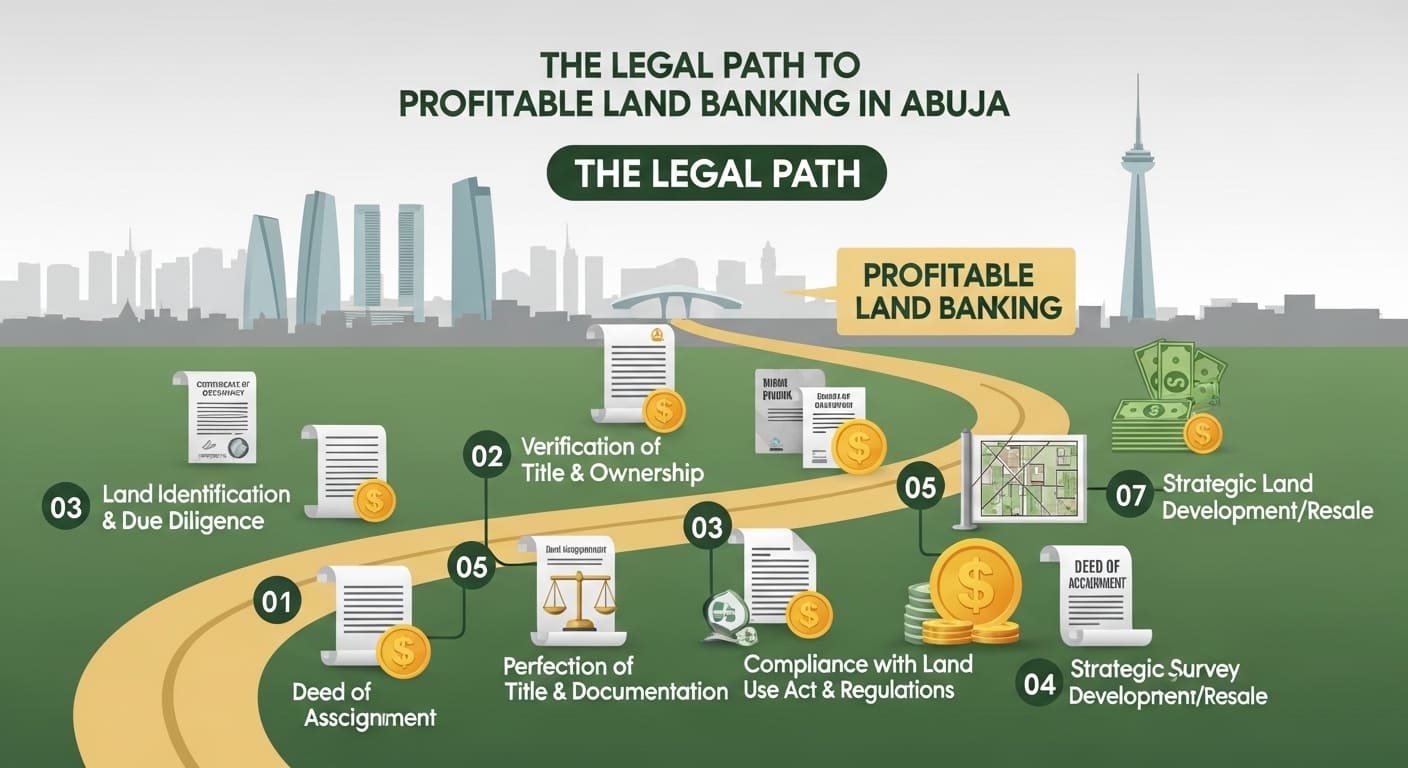
However, in Abuja, successful land banking is not based on speculation or hearsay. It is a legally guided investment strategy built on thorough due diligence, root of title investigation, Governor’s Consent compliance, and proper registration at the Lands Registry. Investors who understand this legal foundation position themselves ahead of growth while minimizing risk.
What Is Land Banking Under Nigerian Law?
Land banking is the practice of purchasing land in areas projected for future development and holding it for capital appreciation.
It is not about immediate construction. It is about understanding growth corridors, infrastructure planning, and legal land tenure systems under Nigerian law.
Under the Land Use Act of 1978, all land in a state is vested in the Governor and held in trust for the people. This makes title verification and consent procedures critical in any land banking strategy.
In Abuja, because of its unique federal structure, consent and documentation processes require careful attention to statutory Right of Occupancy, Certificate of Occupancy, and proper registration at the Lands Registry.
When done correctly, land banking becomes one of the most stable long term investment strategies available.
Feature Story: Meet Emmanuella
Emmanuella is a Nigerian professional based in the United Kingdom. She wanted exposure to Abuja real estate but did not want the pressure of building immediately or managing tenants from abroad.
In 2022, she identified a developing corridor in Abuja. At the time, the area had minimal infrastructure, limited estate development, and relatively affordable pricing.
Many people dismissed it as “not popular.”
However, she did not buy based on emotion. She bought based on structure.
She ensured:
- The root of the title was properly traced.
- The land had valid documentation.
- It was free from government acquisition.
- Zoning permitted residential development.
- Registration and perfection processes were properly handled
Three years later, road construction extended into the corridor. Private estate developers entered the area. Utility expansion followed. Land values nearly doubled.
Emmanuella did not build. She did not advertise. She simply positioned herself ahead of development.
Her return was not accidental. It was strategic land banking backed by due diligence and legal compliance.
Why Land Banking Works Specifically in Abuja
1. Structured Urban Planning Framework
Abuja is a master planned city. Expansion follows identifiable development corridors influenced by infrastructure projects and government urban planning policies. This makes growth patterns more predictable than in many other cities.
2. Infrastructure Driven Appreciation
New roads, estate developments, commercial hubs, and public infrastructure projects directly impact land value. Investors who study planning permits, development approvals, and government expansion direction can identify future growth zones early.
3. Lower Entry Cost in Emerging Areas
Compared to fully developed districts, emerging corridors offer significantly lower entry costs. This allows investors to acquire larger plots at earlier stages before rapid price escalation.
4. Strong Long Term Capital Growth
Historically, land in high growth corridors within Abuja has demonstrated strong appreciation once infrastructure reaches maturity. Investors who enter before development peaks often experience the highest returns
The Legal Pillars of Successful Land Banking
Land banking is only profitable when anchored in proper due diligence and regulatory compliance.
Investors must:
- Conduct root of title investigation
- Confirm valid Statutory Right of Occupancy or Certificate of Occupancy
- Verify Governor’s Consent where applicable
- Ensure the land is free from encumbrances or litigation
- Confirm zoning and planning compliance
- Register and perfect all transfer documents
Failure to comply with consent requirements under the Land Use Act can render a transaction void. This is why structured verification and professional handling are essential.
Land banking without due diligence is speculation.
Land banking with proper legal compliance is strategy.
Abuja Rewards Patience
Land banking is not a get rich quick scheme. It is a long term wealth positioning strategy.
Abuja continues to expand outward in phases. Investors who understand this expansion cycle and align themselves with legally secure land acquisitions often benefit the most.
The key is entering before full infrastructure maturity.
Final Thoughts
Land banking in Abuja is one of the most intelligent paths to building generational wealth when executed correctly.
It requires:
- A solid understanding of the Land Use Act.
- Proper knowledge of Governor’s Consent requirements.
- Thorough and professional due diligence.
- Clear and well structured contractual frameworks.
- Full compliance with planning and zoning regulations
When these elements align, a simple land acquisition today can transform into a powerful financial asset tomorrow.
This is not speculation. It is structured real estate strategy grounded in law and planning.
If you are ready to secure legally verified land in high growth corridors of Abuja before prices rise further, now is the time to act.
Contact us today to explore carefully vetted land banking opportunities backed by proper documentation, regulatory compliance, and strategic location analysis.
Let us help you secure tomorrow’s wealth, today.
